

NLP (Neuro-Linguistic Programming): The Science of Reprogramming Your Mind
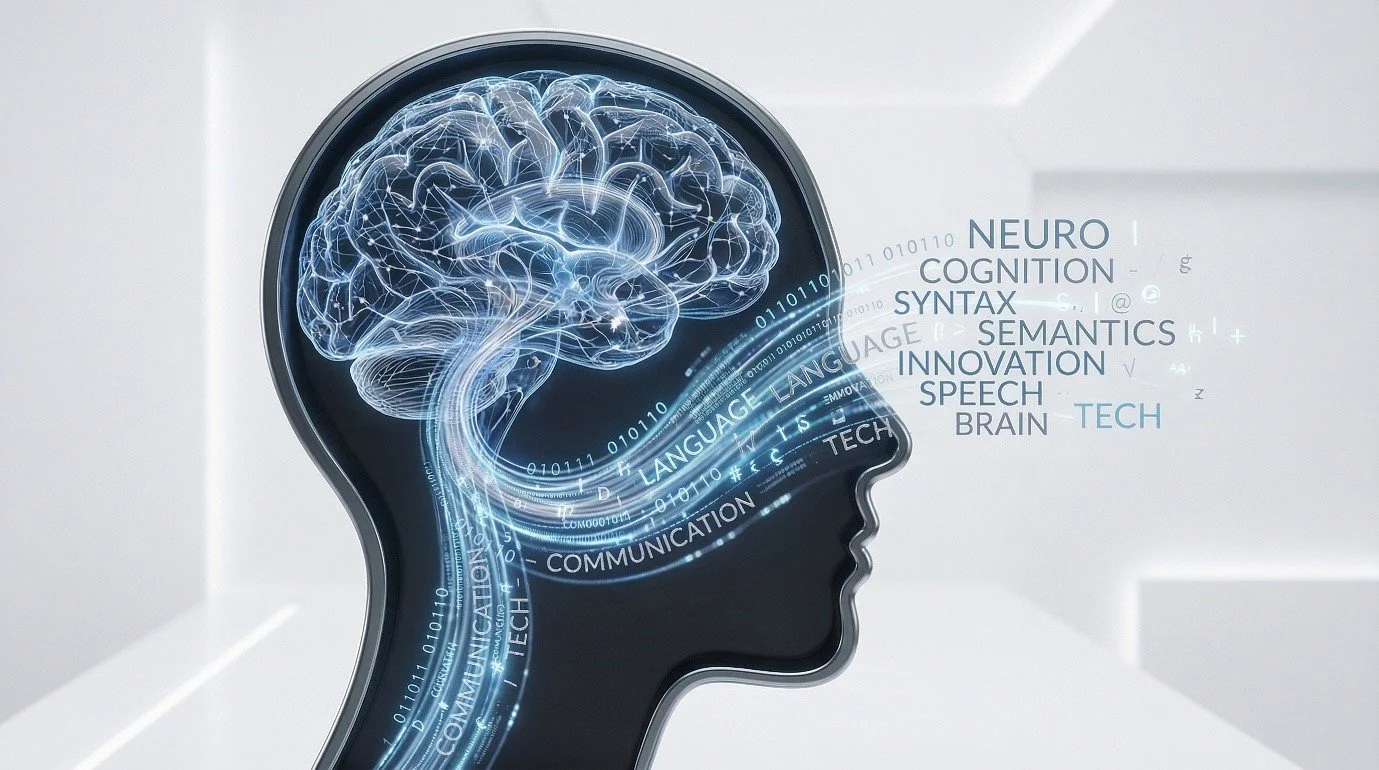
Your mind processes thousands of thoughts daily, yet most people never learn how to consciously direct this mental programming. NLP techniques promise to change that by teaching you to rewire your thought patterns and behaviours.
Who This Guide Is For:
You're curious about mind reprogramming and want practical tools for personal change. Maybe you've heard about NLP therapy but aren't sure what it actually involves. This guide works for beginners exploring behavioural modification techniques and anyone interested in understanding how neuro-linguistic programming claims to work.
What You'll Discover:
We'll start by exploring NLP's origins and core philosophy, tracing how Richard Bandler and John Grinder developed their approach in the 1970s by studying successful therapists. You'll learn about key NLP models and therapeutic approaches, including the Meta-Model and Milton-Model that form the foundation of many NLP techniques.
Finally, we'll examine the scientific evaluation and critical analysis surrounding NLP, giving you the complete picture of both its popularity and the controversies that follow this approach to psychological programming and mental conditioning.
Your journey into understanding subconscious mind training starts here - with clear facts about what NLP claims to offer and what the evidence actually shows.
Understanding NLP: Origins and Core Philosophy
Historical Development from the 1970s by Bandler and Grinder
When you explore the origins of neuro-linguistic programming, you'll discover that NLP emerged in the early 1970s through the collaboration of three key figures at the University of California at Santa Cruz. While most people believe NLP was developed solely by John Grinder and Richard Bandler, the true story reveals that Frank Pucelik was equally instrumental as the third co-creator.
Your understanding of NLP's birth begins with Richard Bandler and Frank Pucelik, who were students at the innovative Kresge College. They became fascinated with Fritz Perls's Gestalt Therapy and started running therapy groups based on Perls's work. Recognizing the need for linguistic expertise, Bandler invited John Grinder, a faculty member specializing in linguistics, to observe their group sessions and apply his knowledge to model and decode what was occurring.
During this creative ferment of the late 1960s and early 1970s, you'll find that experimentation and innovation were at the forefront. The three founders engaged in endless experimentation with procedures and models, constantly refining them and debating their discoveries. Their work was significantly influenced by Gregory Bateson, whose ideas and encouragement permeated their research and served as their mentor and guide.
Definition as a Mind Reprogramming Methodology
When you examine NLP's core definition, you'll understand it as a sophisticated modelling technology. John Grinder defines NLP as "a modelling technology, with a specific focus on the set of differences that make a difference between the performances of genius and average performer in the same field of activity."
Your grasp of NLP as a mind reprogramming methodology center on its objective to explicate transferable and learnable patterns of excellence. The core activity involves mapping tacit knowledge onto explicit models, essentially making unconscious competence conscious and teachable. This process allows you to identify, extract, and replicate the behavioural patterns and language structures of individuals who demonstrate exceptional performance in their respective fields.
Through this modelling approach, you can understand how NLP functions as a mind reprogramming system by breaking down complex human behaviours into learnable components. The methodology enables you to study how exceptional performers think, communicate, and behave, then systematically transfer these patterns to others seeking similar results.
The Three Components: Neuro, Linguistic, and Programming
Your understanding of NLP's foundation rests on its three distinct yet interconnected components that form the methodology's core framework.
The "Neuro" component represents your nervous system and how you process information through your senses. This element focuses on how you experience and interpret the world around you through visual, auditory, kinaesthetic, and other sensory channels. Your neurological processes determine how you encode, store, and retrieve experiences, directly influencing your behaviours and responses.
The "Linguistic" component encompasses the language patterns and communication structures you use to organize your thoughts and experiences. This element examines how you represent your internal experiences through language, both in your self-talk and external communication. Your linguistic patterns reveal the underlying structures of your thinking processes and provide insight into how you construct your understanding of reality.
The "Programming" component refers to your learned behavioural patterns and mental strategies. These are the systematic sequences of thoughts and actions you unconsciously follow to achieve specific outcomes. Your programming represents the habitual ways you organize your thinking and behaviour to navigate various situations and challenges.
Modelling Excellence from Therapeutic Masters
Your journey into NLP's modelling foundation begins with understanding how the three co-creators systematically studied three therapeutic geniuses who consistently achieved remarkable results with their clients.
The first master you should know about is Fritz Perls, the founder of Gestalt Therapy, whose work initially captivated Bandler and Pucelik. Perls demonstrated exceptional ability in helping clients achieve breakthrough results, yet he operated largely from unconscious competence, unable to explain precisely what made his approach so effective.
Virginia Satir, the renowned family therapist, became the second model of excellence. Your appreciation of her contribution to NLP comes from understanding how she could consistently enable families to heal and transform their relationships through her unique therapeutic approach.
Dr. Milton Erickson, the master hypnotherapist, represented the third genius whose patterns were modelled. What makes Erickson particularly fascinating for your understanding is how his approach seemed to violate many of the structured linguistic patterns the founders had initially discovered, yet he achieved remarkable therapeutic results.
The modelling process you should understand involved the three founders unconsciously absorbing the behavioural patterns of these geniuses over approximately two years. They then used language-based models, including Transformational Grammar, to consciously decode what these masters were doing that generated their exceptional results.
This systematic approach to modelling excellence resulted in the creation of two foundational NLP models: the Meta Model (derived from patterns used by Satir and Perls) and the Milton Model (based on Erickson's hypnotic language patterns). These models became transferable tools that you could learn and apply to achieve similar therapeutic outcomes, proving that the patterns of genius could indeed be replicated and taught to others.
Core Principles and Techniques of NLP
Subjectivity and Internal Representation Modification

Your understanding of reality isn't fixed—it's shaped by your internal representations, which are the mental pictures, sounds, and feelings you create about your experiences. In neuro-linguistic programming, you learn to recognize that these internal representations can be modified to change your emotional responses and behaviours.
When you encounter a situation, your brain doesn't store it as an objective fact but rather as a subjective interpretation filtered through your beliefs, values, and past experiences. These interpretations become the building blocks of your mental models, and by changing how you internally represent experiences, you can fundamentally alter your response to them.
Your internal representations operate through sub modalities—the specific qualities of your mental images, sounds, and feelings. For example, visual sub modalities include brightness, size, and distance of mental images, while auditory sub modalities involve volume, pitch, and location of internal sounds. By adjusting these sub modalities, you can transform intense negative emotions into more neutral, manageable states. When you change a dark, close image of a past failure into a smaller, distant, lighter image, you reduce the emotional impact instantly.
This principle of subjectivity extends to reframing, where you change the meaning you give to events, memories, and situations. When the meaning changes, your emotional response automatically shifts, allowing you to view challenges as opportunities for growth rather than threats to your security.
Conscious and Unconscious Mind Division
Your mind operates on two distinct levels that NLP techniques specifically target: the conscious and unconscious mind. Your conscious mind handles immediate awareness, logical thinking, and deliberate decision-making, while your unconscious mind manages automatic behaviours, emotional responses, and deeply ingrained patterns.
The unconscious mind stores your beliefs, values, memories, and learned behaviours, operating much faster than conscious thought. Most of your daily actions—from walking to emotional reactions—happen automatically through unconscious programming. This is why willpower alone often fails to create lasting change; you're trying to override unconscious patterns with conscious effort.
NLP techniques work by communicating directly with your unconscious mind through specific language patterns, visualizations, and behavioural interventions. Anchoring demonstrates this principle perfectly—by associating a specific stimulus (like a gesture or touch) with a desired emotional state, you create an unconscious trigger that can instantly access confidence, calmness, or motivation on demand.
Your unconscious mind also responds to the language patterns used in reframing techniques. When you shift from saying "I have to deal with this problem" to "I get to learn from this challenge," your unconscious mind processes this differently, creating new neural pathways that support more resourceful responses.
Modelling Methodology for Skill Acquisition
The core of NLP's effectiveness lies in its modelling methodology—the systematic process of identifying and replicating the internal strategies of people who excel in specific areas. Rather than simply copying external behaviours, you learn to model the internal processes, beliefs, and mental strategies that drive exceptional performance.
When you engage in NLP modelling, you're essentially reverse-engineering excellence. This involves identifying the specific sequence of internal representations, decision-making processes, and behavioural patterns that successful individuals use. You can then adapt these strategies to your own context and capabilities.
The modelling process typically involves three phases: unconscious uptake (immersing yourself in the model's environment), conscious analysis (breaking down the strategy into teachable components), and unconscious integration (practicing until the new pattern becomes automatic). This methodology has been used to model everything from therapeutic interventions to business leadership strategies.
Your ability to acquire new skills accelerates dramatically when you understand not just what to do, but how to think about what you're doing. By modelling the internal dialogue, visualization patterns, and belief systems of experts, you can compress years of learning into months or weeks of focused practice.
Rapport Building and Information Gathering Strategies
Your success in applying NLP techniques often depends on your ability to build rapport and gather accurate information about internal processes. Rapport creates the foundation of trust and connection necessary for effective change work, whether you're working with others or even with different aspects of yourself.
Building rapport involves matching and mirroring various elements of communication, including body language, voice tone, breathing patterns, and even language patterns. However, deeper rapport comes from understanding and respecting the other person's model of the world—their unique way of processing and representing experience.
Information gathering strategies in NLP focus on uncovering the specific structure of problems and desired outcomes. Rather than getting lost in content (the story of what happened), you learn to identify patterns in how someone processes information. This includes discovering their preferred sensory modalities, understanding their internal dialogue patterns, and mapping their belief systems.
You can use specific questioning techniques to gather this information, such as asking about sub modalities ("When you think about that situation, what do you see? Is the image bright or dim? Close or far away?") or exploring the sequence of internal processes ("What happens first when you start to feel anxious?"). This detailed information allows you to apply techniques like the swish pattern or parts integration with precision, addressing the actual structure of the pattern rather than making assumptions about it.
Your effectiveness in both rapport building and information gathering improves as you develop sensory acuity—the ability to notice subtle changes in physiology, voice tone, and language patterns that indicate shifts in internal state.
Key NLP Models and Therapeutic Approaches
The Meta-Model for Language Pattern Analysis

The Meta-Model serves as your precision tool for clarifying language and recovering lost information in communication. When you encounter vague or ambiguous statements, this model helps you dig deeper by challenging three main linguistic distortions that people commonly use.
You'll recognize generalizations when someone takes a single experience and applies it universally, such as saying "I never succeed" or "Nobody cares about me." In these situations, you can challenge these patterns by asking precision-based questions like "Never? Has there been a time when you succeeded?" This technique helps break down limiting beliefs and opens new perspectives.
Deletions occur when critical information is omitted from statements. When someone says "I feel bad," you can respond with "About what specifically?" to retrieve the missing details that are crucial for understanding the complete picture.
Distortions happen when people misrepresent reality by implying cause-effect relationships that may not exist. If someone states "He makes me angry," you can challenge this structure by asking "How specifically does he make you angry?" This helps the person recognize their own internal reactions and take ownership of their emotional responses.
In therapeutic and coaching contexts, you can use the Meta-Model to help clients become more aware of their linguistic patterns, challenge limiting beliefs, and clarify their thinking. This approach brings structure and specificity back into language, enhancing understanding and creating new possibilities for thought and behaviour.
The Milton-Model for Hypnotic Communication
The Milton-Model operates as the complete opposite of the Meta-Model, utilizing deliberately vague and ambiguous language patterns that allow your listeners to fill in the gaps with their own subconscious material. Named after renowned hypnotherapist Milton H. Erickson, this model bypasses the conscious mind and engages the unconscious through suggestion, metaphor, and artful vagueness.
You can leverage several key features of the Milton-Model in your communication. Ambiguity involves intentionally vague statements that leave room for the listener's unconscious mind to interpret, such as "You may or may not find yourself becoming more relaxed." This approach encourages personal meaning-making rather than direct instruction.
Embedded commands represent subtle suggestions hidden within longer statements. When you say "You can just relax now as you listen," you're delivering a command within a seemingly casual observation. This technique allows for indirect influence without triggering resistance.
Metaphors and stories create powerful vehicles for indirect suggestions. By sharing narratives that parallel your listener's situation, you allow them to derive their own meaning and internalize the message naturally. This approach respects individual autonomy while guiding thinking patterns.
Nominalizations use abstract nouns like "freedom" or "happiness" that encourage listeners to fill in meaning based on their personal experiences. This vagueness creates space for individual interpretation and emotional connection.
Anchoring and Future Pacing Techniques

Anchoring connects emotional states with physical triggers, creating reliable access to desired feelings and behaviours. You can establish anchors by linking intense positive emotional states with specific physical actions or sensations.
To create an effective anchor, first recall a time when you felt confident and determined. Visualize all the images and sounds in your mind while fully experiencing those emotions. At the peak of this intense feeling state, perform a specific physical action like pressing your thumb and index finger together. After repeating this process several times, you'll be able to access those same feelings of confidence and determination simply by activating your physical trigger.
The power of anchoring lies in its ability to provide instant access to resourceful states when you need them most. Whether you're preparing for a presentation, facing a challenging conversation, or working through anxiety, your anchored states become readily available tools for emotional regulation.
Future pacing extends the anchoring concept by mentally rehearsing how you'll use your anchored resources in upcoming situations. You visualize yourself successfully applying your anchored confident state in specific future scenarios, creating neural pathways that support desired behaviours before they're actually needed.
Representational Systems Integration
Your brain processes information through multiple representational systems - visual, auditory, and kinaesthetic channels. Understanding and integrating these systems enhances your communication effectiveness and personal development work.
Visual processing involves seeing images, colours, and spatial relationships in your mind. When you create vivid mental pictures during techniques like mental rehearsal, you're engaging your visual representational system. The clarity and brightness of these images directly impact their effectiveness in programming new behaviours and beliefs.
Auditory processing encompasses internal dialogue, external sounds, and tonal qualities. Your internal voice's tone, pace, and volume significantly influence your emotional state and decision-making processes. By adjusting these auditory elements, you can shift your internal experience and responses to situations.
Kinesthetic processing includes physical sensations, emotions, and gut feelings. This system provides crucial feedback about your internal state and guides intuitive decision-making. Developing awareness of your kinesthetic responses helps you recognize when techniques are working and when adjustments are needed.
Effective NLP practice requires integrating all three systems rather than relying on just one. When you combine vivid visual imagery with supportive internal dialogue and positive physical sensations, you create robust mental programs that support lasting change. This integration ensures that your new patterns are anchored across multiple neurological pathways, making them more stable and accessible in various contexts.
Practical Applications Across Different Fields
Personal Development and Behavioural Change
You can harness neuro-linguistic programming to transform your personal patterns and overcome limiting behaviours. NLP operates on the principle that you are essentially a learning machine that has acquired both beneficial and detrimental patterns throughout your life. Since you weren't provided with an instruction manual for your brain, NLP serves as that missing guide to help you reprogram your mental patterns.
One of the most powerful applications you'll find is belief change. Your beliefs operate as unconscious assumptions that form the hidden foundations of your decisions and potentially your destiny. When you discover disempowering beliefs that hold you back, NLP provides rich methods for replacing them with more empowering alternatives. As Henry Ford noted, "Whether you think you can, or you think you can't – you're right."
You can also utilize state management techniques to elicit and anchor positive emotional states exactly where you need them. Through NLP processes, you can access any positive state of mind you've experienced and strategically place it in situations where it serves you best. This creates measurable improvements in your motivation and focus.
Stress and anxiety management becomes more manageable when you learn how your thoughts and emotions interrelate. You can develop techniques to rewire less helpful patterns, building resilience through healthy mind-body routines that promote wellness and self-regulation during challenging times.
Business and Leadership Training Applications
In the business realm, you'll find NLP particularly valuable for developing leadership capabilities and organizational effectiveness. The technology focuses on studying and replicating excellence, making it highly applicable to strategic leadership development.
Building rapport becomes systematic when you understand NLP principles. You can develop rapport on multiple levels - from matching and pacing another's physical movements and speech patterns to creating criterial rapport by precisely feeding back another's desired outcomes. The most sophisticated approach involves gaining rapport on the level of values, which enables you to persuade with grace, finesse, and empathy.
For vision and communication, you can learn to use language in ways that provide universal appeal, encouraging stakeholders to proactively fulfill their roles in achieving collective goals. NLP language models acknowledge how words and phrase structures influence people at both conscious and unconscious levels.
Your decision-making capabilities improve significantly through NLP techniques. You'll discover more about your personal mechanics of decision-making, learning how you process information and where you place emphasis when making choices. This resolves inertia by developing your ability to work confidently with uncertainty.
Team dynamics and motivation benefit when you understand how motivation truly works beyond surface-level exercises. By connecting with individual core values, you enable team members to bring their full energy and attention to the work environment.
Therapeutic and Counselling Contexts
NLP's therapeutic applications stem from its original development by studying masters of persuasion like Milton Erickson and Fritz Perls. The approach challenges traditional therapy models by focusing on studying high achievers and people who have overcome problems, rather than dwelling on dysfunction.
You'll find that NLP treats thinking patterns like computer code, enabling you to decode and transfer the mental and behavioural patterns that lead to excellence. This approach avoids creating identity-level problems through diagnostic labelling, instead viewing people as learning machines that simply need better programming.
Mediation and conflict resolution become more effective when you can address rapport blockers by finding common ground. You can use multiple perspective methods, identify higher intentions behind dysfunctional behaviours, and elicit belief structures to resolve conflicts systematically.
The reframing technique allows you to put new contexts around situations, adding motivational energy and creating new perspectives that lead to solutions. Nearly any therapeutic situation can be reframed to bring new information forward and help clients see, hear, and feel things differently.
Communication Enhancement Strategies
Your communication effectiveness dramatically improves when you apply NLP's systematic approach to human interaction. The field provides models and techniques to review and respond to the subtleties of successful communication - those small nuances that really matter but often go unnoticed.
Multiple perspectives training enables you to see situations from first, second, third, and fourth positions. You can experience interactions from your own viewpoint, from the other person's perspective, as a detached observer, and from a systems view. This multi-dimensional awareness brings new information that enhances rapport and understanding.
Presence and personal influence develop through powerful state management approaches that allow you to tailor your interpersonal impact. Whether you're leading, coaching, presenting, negotiating, or facilitating, these techniques create more authentic conversations and help you develop flexibility in how others perceive your status and authority.
The technology ensures that your intended message becomes the message received. You'll learn to identify how, why, and where miscommunication arises and what you can do to counteract it. By attending to subtle non-verbal and verbal communication cues, you create the difference between clarity and confusion, transparency and opacity, taking your emotional intelligence to new levels.
Where NLP Meets Hypnosis
Language, Trance, and the Roots of Transformation
Hypnosis has been practiced in various forms for thousands of years—long before it had a name. Across cultures, people have used rhythm, focused attention, and language to create profound states of inner change. When you trace the origins of NLP, you find that hypnosis wasn’t a separate branch of influence but rather a foundational current running through NLP’s very creation.
Modeling the Structure of Excellence
In the 1970s, Richard Bandler and John Grinder set out to understand what made certain professionals achieve extraordinary results with their clients—outcomes that no one else seemed able to replicate. Two of their primary subjects were Dr. Milton H. Erickson, the most influential hypnotherapist of his time, and Virginia Satir, a visionary family systems therapist whose methods transformed how practitioners approached relational healing.
What the founders discovered was striking: although Erickson called his method hypnosis and Satir referred to her practice as centering, both used remarkably similar linguistic and behavioral patterns to facilitate deep change in their clients. The label was different; the underlying structure was the same. By modeling these shared patterns, Bandler and Grinder uncovered the blueprint of how transformation actually happens—regardless of what it is called.
The Integration of NLP and Hypnosis
That discovery became a cornerstone of NLP as a system—the art and science of understanding how language and behavior influence the unconscious mind. The Milton Model, which you explored in an earlier section, is a direct product of this intersection: it is essentially the formalization of Erickson’s hypnotic language patterns translated into teachable NLP tools.
Where NLP brings precision—structured models, conscious analysis, and repeatable techniques—hypnosis brings depth, allowing access to the unconscious layers where patterns are stored and where lasting change often begins. Together, they form a complementary system: NLP maps the territory of the mind, while hypnosis provides a pathway to move through it elegantly and effectively.
For you as a practitioner or learner, understanding this connection changes how you approach NLP techniques. Anchoring, the Milton Model, future pacing, and reframing are not just behavioral tools—they are also forms of directed trance work, guiding attention, bypassing conscious resistance, and communicating directly with the parts of the mind that drive habitual thought and behavior. Recognizing this overlap deepens both your skill set and your understanding of why these methods work as powerfully as they do.
Scientific Evaluation and Critical Analysis

Lack of Empirical Evidence and Research Support
When you examine the scientific literature surrounding neuro-linguistic programming, you'll find that robust empirical evidence remains notably scarce. The research landscape reveals a concerning gap between NLP's widespread popularity and its scientific validation. While NLP techniques have gained enormous traction in applied psychology, business, and therapeutic settings, the foundational research supporting these applications is surprisingly limited.
Your investigation into the available studies will uncover that from hundreds of potential research papers, only a small fraction meet basic scientific standards. In one comprehensive meta-analysis examining NLP therapy effectiveness, researchers initially identified 425 studies but had to eliminate 350 due to relevance and quality concerns. This dramatic reduction highlights a fundamental problem: much of what passes for NLP research lacks the rigor necessary for scientific validation.
Methodological Flaws in Supporting Studies
As you delve deeper into the existing research, you'll notice significant methodological limitations that undermine the credibility of pro-NLP findings. The studies that do support neuro-linguistic programming often suffer from small sample sizes, ranging between just 12 and 115 participants. This limited scope makes it difficult for you to generalize results to broader populations.
Moreover, the vast majority of supporting studies are prospective observational rather than randomized controlled trials. This methodological weakness means you cannot establish clear causal relationships between NLP interventions and reported outcomes. Without proper control groups and randomization, the observed effects could be attributed to placebo responses, researcher bias, or other confounding variables.
Outdated Brain Function Metaphors
Your understanding of modern neuroscience will reveal that many NLP concepts are based on oversimplified or outdated models of brain function. The foundational metaphors used in neuro-linguistic programming don't align with current scientific knowledge about neural processing, memory formation, and cognitive function. When you compare NLP's theoretical framework with contemporary neuroscience research, you'll find significant discrepancies that call into question the program's scientific credibility.
Pseudoscientific Classification by Research Community
The broader research community has increasingly classified NLP as pseudoscientific due to its lack of empirical support and methodological rigor. When you examine peer-reviewed journals and scientific assessments, you'll find that established researchers often place neuro-linguistic programming alongside other practices that make scientific claims without adequate evidence. This classification reflects the scientific community's concern about NLP's promotion of techniques that haven't been properly validated through controlled research.
Despite these criticisms, it's worth noting that some meta-analyses have reported modest positive effects, with standardized mean differences of 0.54 in certain therapeutic applications. However, you should interpret these findings cautiously given the methodological limitations and limited scope of the supporting research base.
As you've explored NLP's origins, core principles, and practical applications, you've encountered a field that promises remarkable transformations yet faces significant scientific scrutiny. While NLP offers compelling techniques for communication, personal development, and behavioural change that have attracted millions of practitioners worldwide, the lack of empirical support and classification as pseudoscience by the scientific community cannot be ignored. The extensive research reviews consistently show that NLP's claims are not substantiated by rigorous scientific evidence, despite its widespread adoption in therapy, business training, and self-improvement programs.
Your journey through understanding NLP ultimately comes down to making an informed decision about its place in your personal or professional development. If you choose to explore NLP techniques, approach them with healthy skepticism and realistic expectations, recognizing that any benefits may stem from general principles of goal-setting, communication skills, and positive thinking rather than the specific theoretical framework NLP proposes. Remember that while change is indeed possible as NLP advocates suggest, lasting transformation typically requires evidence-based approaches, consistent effort, and realistic strategies grounded in scientific understanding rather than promises of quick fixes or revolutionary breakthroughs.
