From Egyptian Sleep Temples to Harvard Brain Scans: The 5,000-Year Case for Hypnotherapy

Picture this. It is 1847. A Scottish surgeon named James Esdaile has just performed four hundred major operations in colonial India. Amputations. Tumour removals. Surgeries that, in the operating theatres of Edinburgh, would require patients to be held down by four strong men while they screamed. In Esdaile’s theatre, the patients lie still. Many report no pain at all. His secret? A technique he calls ‘mesmeric sleep’ — what we would today recognise as hypnotherapy.
Now flash forward to a hospital ward in 2023. A six-year-old girl is being prepared for minor surgery. She does not receive general anaesthesia. Instead, a trained hypnotherapist guides her through a gentle journey — a story, an imagined adventure, a focused inner calm. She feels no significant pain. She is home in two hours instead of four.
These two scenes are separated by 176 years and several revolutions in medical science. They are made possible by exactly the same mechanism. And that mechanism — the mind’s extraordinary, measurable, replicable capacity to change the body’s experience of reality — is what I want to talk about today.
Before It Was Science, It Was Sacred: The Ancient Roots of Hypnotherapy

The first thing worth understanding about hypnotherapy is that it is not new. The idea that focused attention, deep relaxation, and directed suggestion could heal the body and calm the mind is older than written medicine. Much older.
Four thousand years ago, the ancient Egyptians built what they called ‘sleep temples’ — healing sanctuaries in which priests guided the sick and suffering through chanting, incantations, and guided visualisation designed to induce an altered state of consciousness. Patients entered these temples in distress and left them, according to the records, profoundly changed. They were, in every meaningful sense, experiencing hypnotherapy. They simply did not have that word for it.
The Greeks replicated this practice in their Asclepions — temples dedicated to Asclepius, the god of medicine — where patients entered states of deep relaxation through meditation and herbal preparation, seeking healing visions. Across the ancient world, in shamanic cultures from Siberia to sub-Saharan Africa, trance states induced through drumming, chanting, and ceremonial movement were the primary technology of healing. The body was treated through the mind. The mind was reached through altered states of consciousness. What varied was only the ritual container, not the underlying mechanism.
The modern story of hypnotherapy begins in the eighteenth century with Franz Anton Mesmer, an Austrian physician whose theory of ‘animal magnetism’ was spectacularly wrong in its mechanics but accidentally right in its results. His patients genuinely changed. His techniques genuinely produced altered states. The mechanism was not magnetic fluid — it was focused attention, expectation, and the therapeutic relationship. The form was discredited. The phenomenon remained.
It was James Braid, a Scottish surgeon working in the 1840s, who gave us the word ‘hypnotism’ and the first genuinely scientific framework for understanding it. Braid stripped away the mysticism and proposed something radical for his time: that the trance state was a neurological phenomenon, produced by focused attention, and capable of genuine therapeutic application. He was right in 1843. We are only now proving how right he was.
By the mid-twentieth century, the American Medical Association and the British Medical Association had both formally recognised hypnotherapy as a legitimate therapeutic modality. During the two World Wars, it was used to treat what we now call PTSD in soldiers who could not be reached by any other means. Milton Erickson, the American psychiatrist who would become the defining figure of modern hypnotherapy, spent decades demonstrating that the human mind, approached with skill and respect, could heal conditions that medicine had declared untreatable.
The thread runs unbroken from the sleep temples of Egypt to the consulting rooms of the present day. What has changed is not the fundamental truth — that the mind is the most powerful medicine available — but our ability to measure it.
What Happens in the Brain: The Neuroscience of the Hypnotic State
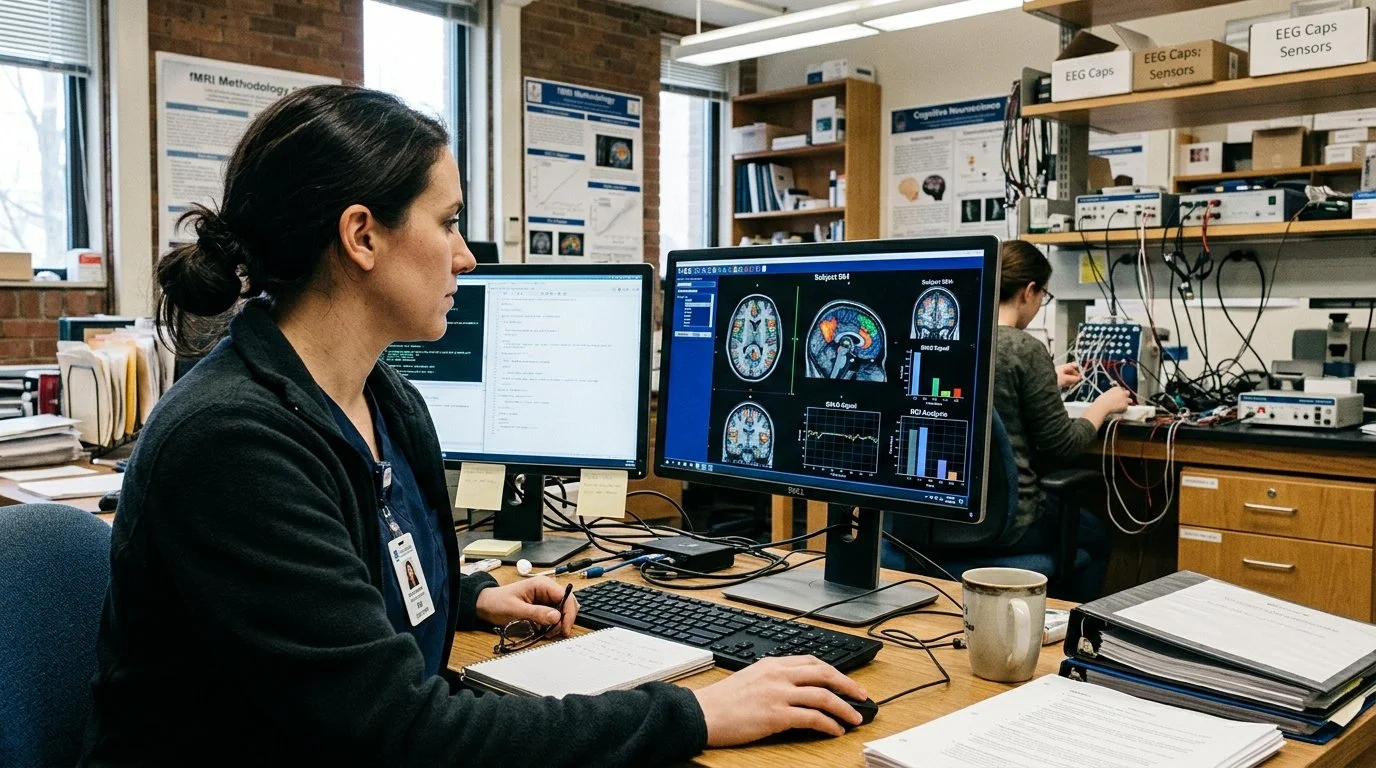
For most of the twentieth century, the question ‘does hypnotherapy work?’ was answered almost entirely through clinical observation. The evidence was compelling, but it relied heavily on patient-reported outcomes — subjective testimony of change that sceptics could dismiss as placebo, compliance, or suggestion without mechanism.
Then we developed functional magnetic resonance imaging. And the conversation changed completely.
The Altered State Is Real — and Measurable
What neuroimaging has shown, with remarkable consistency across dozens of studies, is that the hypnotic state is not a performance, not a placebo, and not a social compliance phenomenon. It is a genuinely distinct neurological state, characterised by specific and reproducible changes in brain activity and connectivity.
The most consistent finding is a significant decrease in activity within the brain’s default mode network — the neural architecture responsible for self-referential thinking, mind-wandering, and the relentless internal commentary that characterises the ordinary waking state. When the default mode quietens, something else becomes possible: a quality of focused, receptive attention that the neuroscientist might call ‘heightened suggestibility’ and the meditator might call ‘open awareness’.
Simultaneously, the hypnotic state produces measurably increased activity in the anterior cingulate cortex — a brain region involved in attention, error detection, and the bridge between cognitive and emotional processing. This heightened ACC activity is particularly pronounced in individuals with high hypnotic suggestibility, and it appears to be the neurological mechanism by which hypnotic suggestions are accepted and acted upon: the ACC focuses attention on the suggestion while filtering out competing information.
The GABA Connection: Why the Hypnotic Mind Is More Receptive
One of the more surprising findings in hypnosis neuroscience concerns gamma-amino butyric acid — GABA — the brain’s primary inhibitory neurotransmitter. During hypnosis, GABA transmission decreases. In ordinary waking consciousness, GABA inhibits emotional responses and limits suggestibility, keeping us appropriately sceptical and self-regulating. When GABA transmission decreases in the hypnotic state, emotional responses become more available, and the boundaries between suggestion and experience become more permeable.
This is not a vulnerability. It is a therapeutic window. In the hypnotic state, the subconscious becomes genuinely accessible — not through force, but through the removal of the ordinary inhibitory architecture that keeps it closed. A skilled hypnotherapist uses that window not to implant foreign content but to help the client’s own inner resources, wisdom, and capacity for change become available to conscious intention.
The neurological picture that emerges from the research is clear: hypnotherapy works because it creates a genuine, measurable, temporary alteration in brain state that makes certain kinds of change possible that are not possible in ordinary consciousness. Richard Bandler, the co-creator of NLP and one of the most influential figures in Ericksonian hypnotherapy, put it this way: ‘There are no inflexible clients, there are only inflexible therapists.’ The neuroimaging data supports his intuition. The brain is always potentially available for change. Hypnotherapy creates the conditions under which that availability can be accessed.
The Evidence Is Overwhelming: What the Research Actually Shows
Let us dispense with a persistent myth. The idea that hypnotherapy is fringe, unproven, or operating outside mainstream medicine is not supported by the research. It is not supported by the positions of the American Psychological Association, the British Medical Association, or the National Health Service in the UK. It is sustained primarily by cultural stereotypes from stage hypnotism and frankly outdated assumptions.
Here is what the research actually shows.
98.3% of paediatric surgeries completed without general anaesthesia using hypnosis (2023 RCT)
70-80% improvement in IBS symptoms with gut-directed hypnotherapy, sustained long-term
27% reduction in pharmacological pain relief during childbirth (Cochrane review, ~3,000 participants)
2× faster recovery for pediatrics patients when hypnosis replaced general anaesthesia
Pain: The Most Studied Application

The most extensive body of evidence concerns pain management — and it is extraordinary. A comprehensive meta-analysis of 34 randomised controlled trials found that hypnosis reduced surgical pain by an average of 7 points on a standardised 100-point scale. This is not a marginal finding. Seven points is clinically significant — the kind of reduction that, if achieved by a pharmaceutical compound, would generate immediate attention and widespread adoption.
Beyond surgical pain, hypnosis has been shown to be effective for burn wound care — where patients receiving hypnotherapy experienced a 9-point reduction in pain intensity and a remarkable 22-point decrease in anxiety on standardised scales. Cancer patients required significantly less opioid medication when hypnotherapy was incorporated into their perioperative care. Hypnotised volunteers tolerate painful stimuli up to 50% more readily than controls. The mechanism, confirmed by neuroimaging, is a measurable reduction in activity in the anterior cingulate cortex — the brain’s pain-processing hub.
50% more tolerant of painful stimuli — the measured pain-reduction effect of hypnotic suggestion in experimental conditions
The history of hypnotherapy and pain is older than modern medicine. Army surgeons used it to hypnotise injured soldiers before amputations during the American Civil War. James Esdaile performed hundreds of major surgeries under ‘mesmeric anaesthesia’ in the 1840s, reporting mortality rates far lower than those of his contemporaries who operated on screaming, fully conscious patients. What was once considered mystical is now confirmed as neurologically real.
Anxiety, Stress, and Mental Health
A 2022 meta-analysis confirmed that hypnotherapy produces statistically significant reductions in anxiety — dental anxiety, pre-surgical anxiety, test anxiety, generalised anxiety disorder. The physiological evidence is equally compelling: children receiving hypnotherapy before burn dressing changes had heart rates averaging 15 beats per minute lower than control groups. This is not self-reported calm. This is measurable physiological regulation produced by a guided mental process.
For depression, a meta-analysis found hypnotherapy achieved comparable results to other established psychotherapies, with particularly promising outcomes when combined with cognitive-behavioural approaches. For PTSD, research supports hypnotherapy’s capacity to process traumatic memories and reduce symptom intensity — without requiring patients to consciously revisit and re-experience trauma at full intensity. For IBS — a condition with a well-documented gut-brain connection — gut-directed hypnotherapy improves gastrointestinal symptoms in 70 to 80% of patients, with improvements maintained at long-term follow-up.
Healthcare Efficiency: The Economic Case
The evidence is not only clinical. It is economic. Breast surgery patients experienced 23% shorter post-anaesthesia care unit stays in the HYPNOSEIN trial — 46 minutes versus 60 minutes. Women using hypnosis during childbirth reduced their use of pharmacological pain relief by 27% across data from nearly 3,000 participants. Hospital stays were halved for paediatric surgery patients when hypnosis replaced general anaesthesia.
In a healthcare system under enormous financial pressure, these findings matter. A modality that reduces medication use, shortens hospital stays, lowers complication rates, and produces no adverse drug interactions is not a luxury supplement to mainstream care. It is precisely what evidence-based practice should be moving toward.
More Than Hypnosis: Why the Integration of NLP Changes Everything

One of the questions I am asked most often is: what makes the approach at Natural and Alive different from standard hypnotherapy? And the honest answer is: the integration.
Hypnotherapy, on its own, is powerful. The research we have explored is unequivocal on that. But hypnotherapy combined with Neuro-Linguistic Programming — NLP — and with the practical framework of well-being coaching creates something genuinely distinct. Research suggests this integrated approach can be up to 70% more effective than either modality used alone.
What NLP Adds to the Equation
NLP — Neuro-Linguistic Programming — is a therapeutic modality developed in the 1970s by Richard Bandler and John Grinder, based on their study of exceptional therapists including Milton Erickson. Where hypnotherapy works primarily through the subconscious — accessing and reshaping deep patterns below conscious awareness — NLP works with the specific cognitive structures, internal representations, and linguistic patterns through which the conscious mind organises experience and generates behaviour.
In plain terms: hypnotherapy reaches the root. NLP rewires the branches. Hypnotherapy creates the conditions for deep subconscious change. NLP provides the precise tools for changing the specific thought patterns, habitual responses, and internal narratives that sustain a problem in daily life. Together, they address the whole architecture of human suffering and human potential not just one layer of it.
The integration has been shown to be particularly effective for anxiety, PTSD, eating disorders, chronic pain, and the kind of deep-seated behavioural patterns that resist more surface-level approaches. When the subconscious is accessed through hypnotherapy and the conscious cognitive patterns are simultaneously rewired through NLP, change happens at multiple levels simultaneously. The result is not a technique you have to apply under pressure. It is a genuinely different way of being.
The subconscious mind learns through imagery, emotion, and repetition. During a session, you are guided to vividly experience responses that may currently feel out of reach — calm instead of anxiety, clarity instead of overwhelm, confidence instead of hesitation. The mind does not fully distinguish between a deeply imagined experience and a real one. — From the Natural and Alive approach to hypnotherapy
The Well-Being Coaching Layer
The third element of the integrated approach — Chopra-certified well-being coaching — addresses what the other two cannot reach alone: the daily life. The practical daily structures, the habits, the relationships, the sense of meaning and purpose that either support or undermine everything the hypnotherapy and NLP have made possible in the session room.
Real change does not live only in the session. It lives in what happens when the session ends in the conversation you navigate differently because the anger pattern has genuinely shifted. In the craving that does not arrive because the subconscious no longer generates it. In the sleep that comes because the nervous system has been genuinely retrained rather than temporarily soothed. Well-being coaching is the architecture for bringing the inner change into the outer life.
Five Myths About Hypnotherapy That the Research Has Retired
Before I talk about what hypnotherapy can do, it is worth being clear about what it cannot do and what it does not involve — because the cultural mythology around hypnosis has done enormous damage to the genuine therapeutic work.
Myth 1: You lose control
You do not. This is perhaps the most pervasive and most harmful misconception. In a hypnotic state, you are always aware, always able to communicate, and always able to return to full waking consciousness at any moment. The hypnotic state is not unconsciousness. It is heightened, focused awareness. No one can make you do or say or believe anything that conflicts with your values, your ethics, or your will. The neuroimaging evidence confirms this: the prefrontal cortex — the seat of executive function and volition — remains active throughout hypnotherapy.
Myth 2: Only weak-minded or gullible people can be hypnotised
The research shows the opposite. Hypnotic suggestibility is associated with higher intelligence, richer imaginative capacity, and greater ability to concentrate. The most hypnotisable individuals are typically those with the strongest capacity for focused attention and vivid inner experience. Moreover, the skill of the therapist matters enormously — a flexible, responsive hypnotherapist can create effective trance states in the vast majority of clients, because the trance state is a natural neurological capacity, not a special talent.
Myth 3: Hypnotherapy implants false memories
This risk, while real in forensic contexts where hypnosis has been misused to recover memories of alleged crimes, is not a feature of well-practised clinical hypnotherapy. The evidence shows that trained, ethical hypnotherapists working within appropriate clinical frameworks do not create false memories. The clinical concern is real and the field has developed robust ethical guidelines in response to it. Working with a qualified, experienced practitioner eliminates this as a meaningful risk in therapeutic contexts.
Myth 4: It is a form of entertainment, not medicine
The American Psychological Association endorses hypnotherapy for pain management, anxiety, and mood disorders. The British Medical Association recognised it in the 1950s. The National Health Service in the UK includes gut-directed hypnotherapy in its guidelines for IBS management. Both the American Medical Association and the British Medical Association have formally recognised hypnosis as a legitimate therapeutic tool for decades. This is not entertainment. It is evidence-based medicine.
Myth 5: It produces only temporary results
The long-term follow-up data consistently tells a different story. IBS improvements from gut-directed hypnotherapy are maintained at five-year follow-up. Smoking cessation rates from hypnotherapy-based programmes compare favourably with pharmacological methods at one-year follow-up. Anxiety reductions from hypnotherapy show better maintenance over time than many medication-based approaches. The reason is straightforward: hypnotherapy changes the subconscious patterns that generate the problem, not merely the surface symptoms. When the root changes, the change is lasting.
What This Means for You: The Personal Dimension
I have been exploring the science and the history because I believe you deserve to understand the foundation of the work we do together at Natural and Alive. Not because you need to be convinced by research before you can benefit from it — the body does not require intellectual consent to respond to a well-delivered hypnotic suggestion. But because the most powerful therapeutic change happens when the conscious mind and the subconscious are both oriented in the same direction.
When you come to a hypnotherapy session with a genuine understanding of what is happening when you know that the relaxed, focused state you are entering is a real neurological phenomenon, that the suggestions offered to your subconscious have genuine mechanisms of action, that thousands of years of human healing wisdom and decades of rigorous neuroscientific research are pointing to the same conclusion — the therapeutic alliance deepens. Trust increases. The subconscious opens more readily. Change becomes more available.
This is what the integration of hypnotherapy, NLP, and well-being coaching at Natural and Alive is built on: the conviction that the most powerful healing happens when the ancient and the modern are not in competition, but in conversation. When the wisdom that understood the healing power of altered states four thousand years ago is enriched by neuroimaging data from 2023. When the practitioner is both deeply skilled and deeply human, and the client is both genuinely supported and genuinely empowered.
Most concerns are often addressed within three to five sessions, in addition to a complimentary initial consultation. Real and lasting change does not have to take years.
Whether you are living with anxiety that has not responded to other approaches. Whether you are carrying the weight of a pattern you cannot seem to change no matter how hard you try. Whether you are in physical pain that medicine has addressed only partially. Whether you are simply ready to feel more like yourself — calmer, clearer, more present, more capable of the life you actually want — the work is available.
The sleep temples of ancient Egypt and the neuroimaging suites of Harvard Medical School are, in this one respect, pointing to the same place: the extraordinary, largely untapped, consistently underestimated healing capacity of the human mind. You already have access to everything you need to change. Hypnotherapy is the practice of remembering how to use it.
A Practical Note: Self-Hypnosis and What You Can Begin Today
One of the most important things a good hypnotherapist does is make themselves progressively unnecessary. The goal is not dependence. It is the transfer of capacity — the teaching of self-hypnosis, the installation of NLP anchors, the development of daily practices that the client owns entirely and can use for life.
Self-hypnosis is not a parlour trick. It is a genuine neurological skill — the ability to voluntarily induce the brainwave states associated with deep relaxation, reduced cortisol, heightened self-regulation, and the creative problem-solving that emerges when the critical, self-monitoring mind is temporarily quietened. Research shows that even brief daily self-hypnosis practice — as little as ten minutes — produces measurable reductions in anxiety and stress, improved sleep, and enhanced emotional regulation.
The simplest beginning is the breath. The 7-11 technique — breathing in for a count of 7, breathing out for a count of 11 — activates the vagus nerve and the parasympathetic nervous system within 60 to 90 seconds. The extended exhalation signals safety to the nervous system. Heart rate variability improves. Cortisol begins to decline. The brainwave frequencies associated with the hypnotic state begin to emerge. This is not mysticism. This is the nervous system responding, as it always does, to the deliberate direction of attention.
Begin there. Sit quietly for ten minutes, breathing in for seven counts and out for eleven. Let the mind settle. Notice what is already present when the mental noise reduces. This is the very beginning of the same practice that healed soldiers in Egyptian sleep temples, that Esdaile used in his operating theatre, that neuroimaging is now mapping onto the structure of the human brain. It belongs to you. Use it.
The Thread That Runs Through Everything
There is a thread that runs from the sleep temples of ancient Egypt through the mesmeric operations of James Esdaile, through the corridors of the American Medical Association’s 1958 formal recognition of hypnotherapy, through Milton Erickson’s genius, through Richard Bandler’s revolution in NLP, through Sara Lazar’s Harvard neuroimaging studies, through the 2023 paediatric surgery trial, to the consulting room at Natural and Alive where someone sits down, closes their eyes, and begins to breathe.
That thread is a single, enduring truth: the mind is the most sophisticated healing technology in existence. Not a passive recipient of what happens to the body. Not a helpless bystander to its own patterns and conditions. An active, creative, extraordinarily powerful participant in the shaping of physical and psychological experience.
Hypnotherapy does not give you something you do not already have. It helps you access what has been there all along — beneath the noise, the conditioning, the accumulated patterns of a life that has not always been easy. It is the practice of remembering that the capacity for change, for healing, for genuine peace and genuine aliveness, is not something that must be earned or acquired or hoped for.
It is already here. It has always been here. The work is simply the practice of finding your way back to it.
Ready to Experience Hypnotherapy for Yourself?